• Skip to primary navigation
  • Skip to main content
  • Skip to primary sidebar

Lots of Helpers

Our family's life in New Zealand

  • Home
  • Our Library
  • Math Freebie
  • Contact Us
  • Legal Policies
    • Disclosure and Disclaimer
    • Privacy Policy
You are here: Home / Archives for Homeschooling

Homeschooling

Cooking Class!

June 23, 2018 by NZ Filbruns Leave a Comment

I was chosen recently to review Kids Cook Real Food, a cooking class for children starting with raw materials rather than processed foods. I haven’t felt like I did the best at getting my children to help prepare meals, so that’s why I was interested in it. Well, since getting started with this course, I have discovered that my boys know more than I thought they did, but it has been good for the younger ones, especially. The first several lessons have to do with using knives safely. The beginner class doesn’t use sharp knives, so even 2-3-year-olds can do this. Little Miss is delighted that she gets to help cut up food, and several times since we started the course she and Mr. Imagination have spent an hour at a time cutting things up for me. Today, they have been dicing potatoes and eggs for potato salad, and now they are dicing some mushrooms for tonight. They have great fun and it makes them feel good to be doing real work! I bought a crinkle cutter just for this project; Little Miss loves it. See how focused they are on their job? I’ve been surprised by how well they can cut things up, and I appreciate the safety tips we have gotten from the videos we’ve been watching. (This post isn’t my review; I may or may not do a review here. I just wanted to show Grandma what the little people are doing today.)

1-IMG_46792-IMG_4678

Filed Under: Activities at Home Tagged With: Homemaking, Homeschooling

Product Review—Persuasive Writing & Classical Rhetoric

June 20, 2018 by NZ Filbruns Leave a Comment

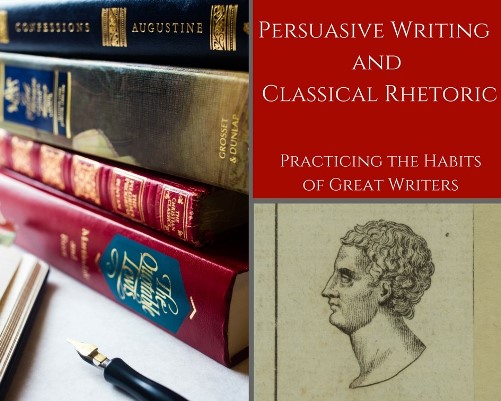
About two and a half years ago, Mr. Intellectual told me that he wanted a more structured Language Arts program. I had been finding things here and there for him to do, but he didn’t like that and wanted to learn more. We started using the curriculum that I had grown up with, and he did all right with that for awhile, but by this year he was thinking he wanted something different. We switched to another, which focused mostly on writing all sorts of different types of things, and he liked that pretty well. Then, a couple of months ago, we were offered the chance to review Persuasive Writing & Classical Rhetoric: Practicing the Habits of Great Writers, from Silverdale Press LLC. I showed it to him and he spent quite a long time studying the website and the sample pages that were available, and decided this was what he was really wanting. He’s been using it now for about six weeks, and is really enjoying it. Persuasive Writing and Classical Rhetoric

I asked Mr. Intellectual to write a review of the course, since he has used it and I have hardly even looked at it, so this is what he came up with:

To start out, I will give you a overview of the course. It is a self- guided course. The student goes at his or her own pace, but there is a four-day chart that can be stretched out into five days if you prefer. On the first day, you read the lesson and the profile in rhetoric (talking about someone who inspired the subject); for example, Wendell Berry was used as a man who used rhetoric to argue on the subject of economics, Ida M. Tarbell on the subject of research, and John Locke on the subject of note-taking.The second day is reading something by the person in the profile in rhetoric, the third day is an activity expanding on the subject, and the last day(s) are taken up with writing an essay on a given prompt. Sometimes, of course, it is easier to come up with a fitting essay than others, but it is good for stretching your brain.
When we got the chance to get this course, I jumped for it, and I was not disappointed. It is both a course on talking and writing. Rhetoric is both, and I feel that to some extent it has helped me on both. Some of the prompts have been fairly hard for me to build on; in week four, they had an assignment to go to Walmart and write an essay on its pros and cons, but the problem is that we are in a country where Walmart is unheard of, so I had a lot of trouble with that one. Mom ended up letting me stick to a smaller word count as a result of getting stuck since I can’t go to Walmart (I could’ve if I could’ve gone to the states, but no one would pay the ticket : ( ). Otherwise I’ve had no problems with the course.

Now you are asking two questions, one is whether you really want the course, and two is whether or how the course will help you. I can’t answer that first question for you, but if you do decide to get the course, then it will help you do research better, which will help you have strong arguments in any sort of debate. That will help you be a better person and a better citizen. It takes perseverance, but if you do persevere, then it will help.

As he mentioned, there are four parts to each lesson. There are also four books that make up the course! The lesson book contains a lesson about some aspect of writing persuasively—from the beginning, where rhetoric is defined, on through the process of learning how to get people to see things your way, on through polishing your work. I even saw a lesson on correctness in punctuation. The five sections that lessons are divided into are Introduction, Invention (which includes an interlude for research), Arrangement, Style, and Conclusion, where the student is encouraged to keep writing.

The reader contains speeches and essays by famous historical figures, to give examples of rhetoric, or persuasive writing. These are from people such as Patrick Henry, Winston Churchhill, John F. Kennedy, and even Jane Austen! There is one selection per week from weeks 1-31, with the exception of two weeks toward the beginning, when the student is to do a research project, and again in about the middle, when there is another interlude for writing.

The workbook has four sections for each lesson. The first contains questions about the lesson; the second is review questions about the reading, and the third is designed to help the student explore the week’s topic more in-depth. The fourth is lines for the 500-word essay that the student is expected to write each week! We haven’t used that section, since Mr. Intellectual prefers to type his essays. There is also an answer book, although I’ll have to admit that we haven’t put that to use as we should have. As I said at the beginning, I have hardly taken the time to look at this, since Mr. Intellectual is a self-starter when it comes to academics.

Because Mr. Intellectual is quite interested in writing, this course is a good fit for him. It would not have been useful for his older brothers, and it won’t be for at least a couple of the younger ones, but for someone who has an interest in writing, it is very good. I’m thankful we found it and had the chance to use it!

Crew Disclaimer

Filed Under: Book Reviews Tagged With: Homeschool Review Crew, Homeschooling, Product Review

Product Review—The Critical Thinking Co.

June 6, 2018 by NZ Filbruns Leave a Comment

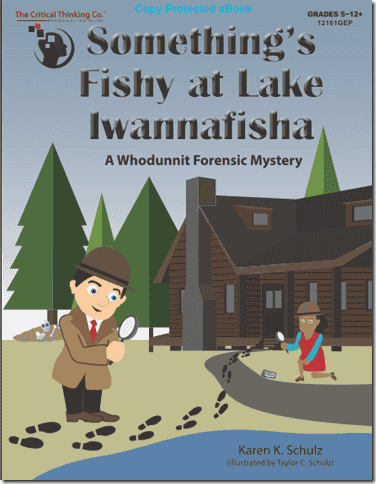
When we had the chance to review something for The Critical Thinking Co.™ recently, I asked Mr. Intellectual to look over the choices with me, as this looked like products he would enjoy but no one else in the family would be interested in. Sure enough, he was very interested in Something Fishy at Lake Iwannafisha. He loves mysteries and puzzles, so this was perfect for him.

Untitled

The first thing I had Mr. Intellectual do was study the Forensic Evidence Lessons, since he had never learned much about that topic. There were lessons about anthropology, arson, ballistics, counterfeit money, death investigation, document and handwriting analysis, and fingerprints. After he spent his spare time for a day or so studying this, I gave him the first part of the mystery to solve.

In Something Fishy at Lake Iwannafisha, A Whodunnit Forensic Mystery, you are given a scenario, and have to figure out what happened and who did it. Students first get a brief introduction and a map of the area in which the incident happened, and the police report for the case. The police department was called to a fishing cabin, where they found a shed in flames, a body, and a lot of money. After studying this initial report, they are to ask for the witness statements they think might be helpful, and whatever other reports might help them figure out the case. They aren’t given a list of what is available—they have to figure out what to ask for based on the crime scene report! I found it a bit challenging to know how to guide this investigation, since I knew the whole story already but didn’t want to give any information away prematurely. It’s laid out very well, though, and I really appreciated the checklist of all the documents I had available to give him. The instructions are quite clear.

Mr. Intellectual spent about 7-8 hours on this project, not counting the time spent on the forensic evidence lessons. He pretty much knew who did the crime by the four-hour mark, but it took a long time to work out the details and figure out possible motives. Recording all the supporting evidence meant a lot of thinking and writing, which was very good for him.

See all the pages he had to work through:

1-IMG_4652

A few tips if you want to use this book: Buy the digital download rather than the physical book. You’ll want to be printing a lot of pages anyway. Print single-sided rather than double-sided, because it will be a lot easier to spread things out in front of you and compare notes. Also, it would be a good idea to do this in groups or teams so you can have two minds thinking about it. I asked a question once or twice to get him thinking in a different direction so he could solve the mystery, but as I said, since I knew the answers, I had to be very careful how I worded it. Having a partner who didn’t know would have been good, but none of the other boys was interested.

This made a great project during a week that we took off school a few weeks ago. It’s intensive enough that it would have been hard to fit in during a normal week, but makes a nice change-of-pace for a break. Incidentally, during that week a car crashed across the road from us in a high-speed police chase. Studying the tracks to see exactly where the car went gave the children some hands-on practice in forensics.

My final opinion? I would have preferred a scenario that didn’t involve murder, but I felt like this was valuable practice for my boy in searching out the truth of what happened, and thinking logically about evidence that he found. I know he really enjoyed it, and it was good for him.

Crew Disclaimer

Filed Under: Book Reviews Tagged With: Homeschool Review Crew, Homeschooling, Product Review

Product Review—PandaParents

May 16, 2018 by NZ Filbruns Leave a Comment

I have a little girl who loves doing school. She is only three years old, but she badly wants to do school just like everyone else does, and is thrilled when I print her a page to do. When PandaParents asked for people to review their program, MESSYLEARNING FOR PRESCHOOLERS AND KINDERGARTNERS, I showed it to her. She wanted me to print it out immediately so she could get started that night, and wasn’t real happy when I told her she had to wait till it was sent to us. Ever since we got it, she has been wanting to do her “new school” almost every day. One Sunday night when I was putting her to bed and she was overtired, she cried that she “had to do her school” and therefore couldn’t go to bed yet! Of course, I let her know that she was definitely going to bed right then, and had to wait till morning to do school, and then Gayle and I had a chuckle about the latest excuse for prolonging bedtime. Panda Parents Kindy Curriculum

Each month of MESSYLEARNING has a storybook and a video of the same story being read, and then a lot of activities to go along with the story. These activities teach concepts such as patterns, shapes, sounds, and numbers.

We were sent three months of the program. I did not use A Jolly Jingling Journey, because we don’t do Santa Claus. I did look over it a bit; basically the story is about a little boy dreaming about going to the North Pole and meeting Santa Claus.

The first month we did is titled Mommy Baby. The story has to do with a child who doesn’t want to go to bed, and she and her mother play a game of Mommy and Baby–(“Are you Mommy’s little mittens? I am your little mittens.”) and so on. In the activities, several letters of the alphabet are introduced. There are activities that test comprehension and retention of the story, and others that talk about emotions and feelings. One section of pages discusses animal’s tails, what they look like and how they are used. One page matches animal mothers to babies, and some talk about big and little. There are also pages for matching pictures to silhouettes, and objects to their shapes. I was really surprised with how well Little Miss did on this one. I had her cut out the objects and glue them to the shapes, and even though her cutting skills still need some improvement she remembered the shape of the object and matched them all correctly. Toward the end of the book is a project of coloring and cutting out shapes and glueing them together to build a panda. Little Miss isn’t quite ready for this one, so we didn’t do it.

8-IMG_446502-IMG_4496

The other month we did is titled Scotty Skunk Hears a Scary Sound. This story involves a skunk searching, through the four seasons of the year, for a good home. I don’t think the seasons mean anything to Little Miss yet; she couldn’t seem to grasp that concept. She loved doing dot-to-dots of a few letters, though, and coloring the S’s in a grid to make a path for the skunk. She did very well with the pages of matching animals to their homes and to silhouettes. Farther on, there is a project in which you are to make a picture of a sailboat by cutting and glueing shapes. I think she’ll be able to do that.

1-IMG_45732-IMG_4574

This course is fun for little ones who are begging to do school. For us, the timing was perfect, since I don’t have much suitable for a three-year-old, but have one who needs to feel like she’s doing the same kind of things the older children do. One thing that would have made it a lot better would be to have a physical copy of the book. There are so many pages to print, in color, that it would just be a lot nicer to have a workbook to use. Also, the instructions often suggest using stickers to cover pictures; it looks like these will be included in print versions, but obviously we only had pictures to cut out and glue. We did do some of the activities on the screen, but I don’t like to do that very much. For this age, I really prefer a hard copy. I liked all the practice Little Miss got with her fine motor skills. She has done a lot of tracing, coloring, and cutting with this program. I’ve been letting her glue the pictures she cuts out into a notebook, so we have somewhat of a record of what she has done at this age. I do think that for most children 4 or 5 would be a better age to do these books. There are a number of concepts that she wasn’t able to grasp yet, as I mentioned above. Maybe the best way to use it would be to use part of it as a preschool program and then again in a couple of years as a kindergarten program! It introduces a wide variety of concepts.

Edit: As of 2024, this website seems to be gone. I cannot find it anymore.

= Crew Disclaimer

Filed Under: Activities at Home Tagged With: Homeschool Review Crew, Homeschooling, Product Review

Product Review—Kids Email

May 15, 2018 by NZ Filbruns Leave a Comment

We were recently assigned to do a review of Kids Email Safe Email for Kids, and given a one-year subscription. I wasn’t at all sure we needed it, because when my children wanted to email someone I just let them use my gmail account. We were put on the review team, however, so I signed the four up who are in school this year. I’ve been pleasantly surprised with the results, and may just end up paying for this service after our year ends.

Kids Email

Kids Email was started in 2009 as a safe way for children to email. Parents have the control over what happens with the child’s account; there are many settings you can tweak so that your child can only use it the way you want them to. All incoming and outgoing messages can be sent to your inbox, and you can set it so that only letters from approved senders are visible to your child (you have to approve a person the first time they send something). You can also set particular times or days when the program can be accessed, if you wish. There is also a filter watching for bad language. We had to laugh at one email that Mr. Imagination got from a cousin. The cousin was listing the baby animals on their farm, and one item in the list was 250 CENSORED. We knew from the context that it was chicks, and of course we knew it was the kind of chicks we approve of, but I was happy to see how the filter works.

Here is what I see when one of the boys gets an email from someone I haven’t previously approved:Kids Email screenshot

One feature that my boys have loved playing with is the ability to draw pictures. They use the computer mouse, and can choose the size of line or dot they want, and the color, and draw whatever they want to. That is good eye/hand coordination! When they are finished, they simply attach the picture to the email they have written. I have heard some complaints that there aren’t enough colors, but otherwise they are very happy with that part of this email.

Here are a couple of the pictures they have come up with. This was at the beginning; they are getting a little more skillful now.08-IMG_441910-IMG_4423

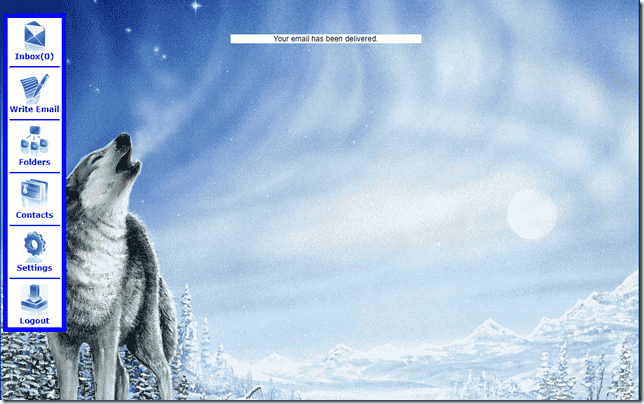
The boys also like that they can choose the background for their inbox. There are a number of pictures to choose from; I think all of them chose either the wolves or the horses. For girls, there are some princess-type pictures, too. These just make it more fun!

Kids Email screenshot 2

Another thing I really like about it is that it gives some of the boys a lot of practice in typing. They do typing courses, but this forces them to make up what they are typing as they go, rather than copying. I type what the younger ones dictate, but the older ones have to do it themselves, and then I help correct spelling so that the recipient can understand what they get! One problem we have run into, though, is that there doesn’t seem to be an autosave function. I might be missing something (it’s not unlikely), but if the page is accidentally reloaded, everything that has been typed so far is gone. Once, I was helping someone send an email that took a long time to write, and the internet blinked off, which it often does here. The email was lost. That usually brings tears of frustration, even if I help them redo the letter.

This program also grows with the children. When they are young, their address is @kidsemail.org, but when they are a bit older, you have the option of changing to @kmail.org, if they want a more adult-looking address. Children who use the kidsemail.org address have the option to have an incoming email read aloud to them. This worked the first time or two that we tried it, but after that it didn’t; probably my old computer was the problem. I like the idea—it’s another way to get children to practice reading as they follow along!

Overall, I am very happy with Kids Email. This is one review product that I didn’t think we needed, but I’m now glad we got it. Because of this, I have incorporated writing an email a week into each of their schedules, which is something I had wanted to do but never got around to doing. So, Grandma, aunts, and cousins get to hear from my children a little more! On the other hand, some of my boys aren’t too happy about it. They would rather not have to type something out of their heads, but rely on me to write letters when they want them sent.

Crew Disclaimer

Filed Under: Activities at Home Tagged With: Homeschool Review Crew, Homeschooling, Product Review

Product Review—Reading Kingdom

May 9, 2018 by NZ Filbruns Leave a Comment

Sometimes we end up with products to review that I wasn’t very excited about. Reading Kingdom was one of those; my hesitation was because it is an online program, and I don’t like my younger children to have a lot of screen time. We were assigned to this review, however, so I had Mr. Sweetie and Mr. Imagination use it every day as part of their schoolwork. I’m still not sure what I think of it! Reading Kingdom

Reading Kingdom claims to teach reading by immersion, the way young children learn to talk. Rather than only teaching sounds, as phonics does, Reading Kingdom also teaches sequencing, writing, meaning, grammar and comprehension. The course is made up of a series of stories. Each story is introduced by first teaching each word. A variety of methods are used to teach the word, including showing several words with blanks and the child has to choose which one can turn into the desired word. After all the words in the story have been mastered, both on its own and in a sentence, the child gets to read a book on the screen. Here is an example of one activity, this one teaching the word “they.” Also on this screenshot you can see a couple of other features that enhance the program. The number in the yellow box is the number of points earned so far; each 20,000 points advances the child to the next level. The reward isn’t much, but they enjoy seeing what happens next when they open their passport. 2/15 indicates how many parts they have done out of the total in the session; this session has 15 parts, and he is on the second one.

Reading Kingdom screenshot

Children are supposed to use this program four days a week or more for best results. My boys have averaged 3.6 days and 4.4 times a week—yes, they have those numbers on the dashboard where we go every day to access the lessons! It is recommended to only do one or two sessions per day (in the lower levels, only one word is taught in a session), but there is a way to override this if you want your child to do more. A couple of times, I allowed my boys to do up to four sessions, with breaks in between, but most of the time they did just one or two, depending on time. They did enjoy this; I don’t very often let them play games on the computer, so this was a game they were allowed to do and that made it fun. One problem Mr. Imagination had was that the screen moved on too fast for him, but after I got into the settings and changed it to move slower, he could handle the lessons much better. The default speed was just right for Mr. Sweetie.

I have thought of some pros and cons for Reading Kingdom:

Pros: Children can do this program with very little input from an adult. It is set up so that they can do it completely independently. Using this program helps children learn to spell and use the keyboard at the same time they are learning to read.

Cons: Children are expected to figure out without being told when to use a capital letter to begin a sentence, and when to use the correct punctuation. The punctuation wasn’t too hard for my boys to pick up, but the capitalization was a major frustration for them. Many times I had to rescue someone who was crying because he kept hitting the right key and it wasn’t accepted! Also, teaching reading by immersion, while it works for some children, will not work for others. I have had children who could only learn something if it was specifically told to them—they could not figure things out from context clues.

I asked the little boys what they think of it. Mr. Imagination said, “I like every single bit of it except the aliens.” These “aliens” are pictures that appear every so often. I’m guessing they are included to appeal to children who play a lot of video games, but I could sure do without them! Most of the pictures are alright, though. Mr. Sweetie said, “I have learned to spell a few words, but didn’t learn much about reading.”

I really haven’t decided yet whether Reading Kingdom will help my boys or not. I had Mr. Sweetie use a reading fluency test when he began using the course and again after five weeks of using it, and there was really no difference in the two tests. They are enjoying it, however, so I will let them continue doing it. It’s better than most computer games I’ve seen!

The same company has also developed a program called ASD Reading, which is for children on the autism spectrum. If you have a child like that, you may want to look into this program.

Crew Disclaimer

Filed Under: Activities at Home Tagged With: Homeschool Review Crew, Homeschooling, Product Review

Art Projects

May 5, 2018 by NZ Filbruns Leave a Comment

There have been a few art projects done around here lately, which is unusual for our family. Some were assigned, some were spontaneous. This first one was part of our Geography lesson about Colombia. The three youngest colored the pictures of poison dart frogs, cut them out and glued them together, then glued them onto a leaf. The top one is Mr. Imagination’s, Mr. Sweetie’s is next, and Little Miss did the third one.

40-IMG_433741-IMG_433942-IMG_4340

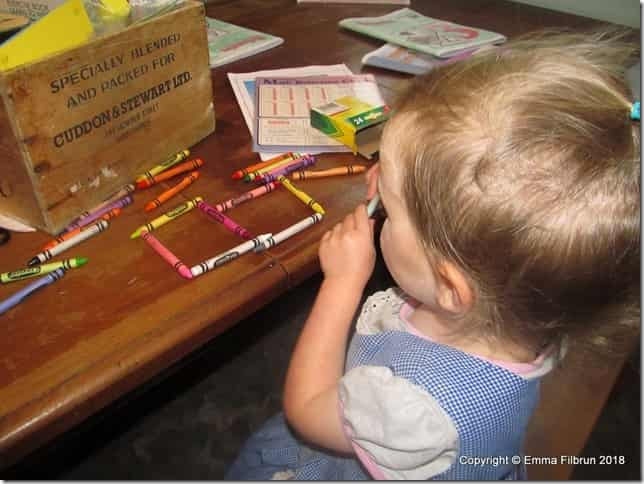
Little Miss laid out this pattern with crayons one day. She spent a lot of time working on it.

07-IMG_4417

Another day, she got the school crayons and told me she was making squares.

14-IMG_4427

Her next activity was to draw circles! I think one of her brothers drew the stick figure, but she can do stylized people herself.

15-IMG_4429

This was another activity from Geography, this time from Ecuador.

17-IMG_4437

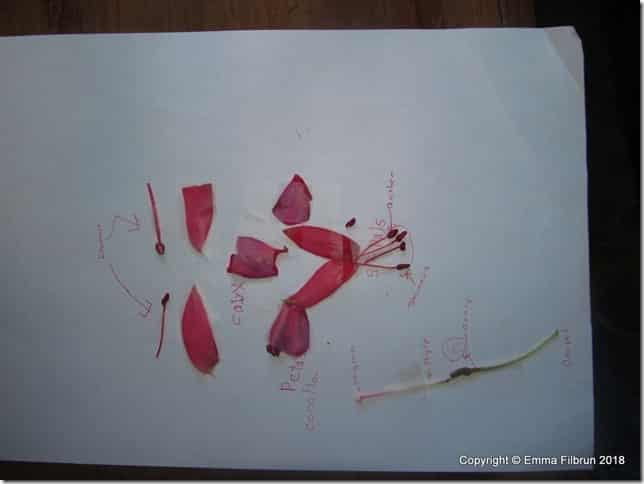
For science one day, we dissected a flower and taped the parts to a sheet of paper. Mr. Imagination put his parts in the shape of a face.

18-IMG_4438

This is Mr. Diligence’s. I didn’t get a picture of Mr. Sweetie’s; after I took the first two pictures someone suggested making a color copy of the pages to put in their notebooks instead of printing photos—what a good idea!

19-IMG_4439

Filed Under: Activities at Home Tagged With: Art, Homeschooling

Product Review—Creation Illustrated

April 4, 2018 by NZ Filbruns Leave a Comment

When I had the opportunity, a few weeks ago, to sign up to review some unit studies that Creation Illustrated has started producing, I thought that sounded very interesting. I have never used unit studies, so this seemed like a good way to try one out. I was given the choice of using the Snow unit study, or the one about Pine Trees. Because we are studying botany for science this year, I thought the Pine Trees study sounded like a good fit. I was sent the Snow study as well; maybe sometime we’ll use it. Creation Illustrated Unit Study Pine Trees

CI Fall17 FrontCoverSM

I have found this study interesting. We started by reading an article about pine trees from the Fall ’17 issue of Creation Illustrated, which is linked to in the unit study. There was a lot of information about pine trees (I didn’t know that only one species is native to the Southern Hemisphere!), where they live, how they grow, and what they do for mankind, as well as spiritual lessons that can be drawn from them. After that, we watched several YouTube videos that were linked to. One that was especially interesting was about pine trees in Japan, and another that we enjoyed was about the second oldest Bristlecone Pine in the world. Amazingly, it began growing soon after the Flood!

After our introduction to pines through the article and the videos, we started on the study itself. The first written activity was to learn to spell and define a list of vocabulary words. This was too hard for my 6- and 8-year-olds. The 12-year-old would have greatly struggled with the spelling, since he is dyslexic and these are hard words, so we skipped that part. We did work on definitions, though, by matching the words on one page with their meanings on the next page.

A Bible study about pine and fir trees was the next activity. We looked up the references given, and then decided if the verse talked about pine or fir, and what the wood in it was used for. I was glad that the version used was noted, because once we didn’t notice that it said NIV, and we couldn’t figure out what we were supposed to see! Once we did notice that, we skipped the verse. The last activity we had time for was to name the area in which certain pine trees are native, and then locate them on a map. Because we have had to take several days off lately, when I was sick or we were away, we didn’t quite finish the study, but I plan to next week. We’ll be identifying pine trees in photographs and answering a lot of questions about pine trees, and then doing a page of math calculations based on pine trees. I’m not sure yet if we’ll do an essay or an art project about pines; we’ll see when we get there. The last activity is a word search, so that will more than likely happen.

The Intricacies of Snow unit study appears to be very similar. One thing that would be very difficult for us to do is building an igloo, which is an activity that is suggested! There were more fill-in-the-blank questions in this study, it looked like when I flipped through. This study is based on an article in the Winter ’18 issue.

I have learned, by doing this review, that unit studies really aren’t our style. I’m glad to know that—but if they work well for your family, definitely consider trying out some of these! I like the way nature study, Bible study, Language Arts and Math are all tied together here. Creation Illustrated Unit Study Snow CI-Win18-CoverFront-150dpi

Creation Illustrated is a beautiful magazine. The photography is incredible, and inside both the front and back covers of both of the issues I looked at is a two-page full-color photograph of a beautiful scene from nature, with a Scripture verse on it. I enjoyed looking over the articles and reading some of them. Each article uses some facet of Creation or the created world to bring out spiritual truths. I noticed articles on such topics as how kangaroos care for their young (fascinating!), the Grand Canyon, a man living a self-sufficient life in Alaska, and a family caught in a blizzard. Each issue also includes recipe cards for vegan dishes, a study guide for the issue, and a coloring picture and photo contest. One of the articles focuses on a day of Creation, a different day for each issue that I saw. A unit study is also being written to go along with each issue. If you purchase the unit study, which is especially aimed at 5th-8th graders, you will get a link to a digital edition of the magazine. The unit study is downloadable, so you can use it for multiple students in your family. The unit studies are available here. If you are looking for character-building or nature-study resources in an attractive format, these magazines are great! Subscriptions to the quarterly print magazines are here, and subscriptions to the digital version will be available soon. Here is a peek at the Spring ’18 issue, which will be available very soon:

CI Sum15 Cover Pages  Crew Disclaimer

Filed Under: Activities at Home Tagged With: Homeschool Review Crew, Homeschooling, Product Review

Product Review—Carole P. Roman

March 27, 2018 by NZ Filbruns Leave a Comment

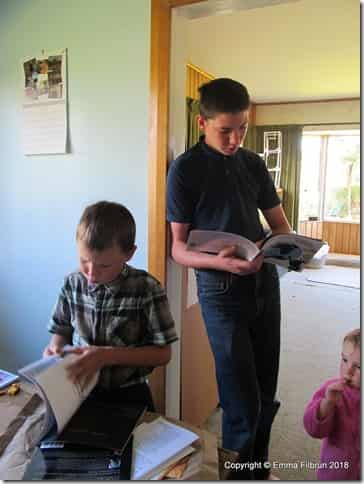
Most of the time, when I review a product, it is digital. That makes the rare occasions when we are sent a physical copy of something quite special! Our most recent review is one of those; we were sent three books from the Carole P. Roman books and collections. Out of a long list of possible titles, I chose two about American history and one about Kenya. As soon as the books arrived in this house, they were being read—and reread! A couple of weeks later, Little Miss is still loving them!23-IMG_4297

I had never seen any books by Carole P. Roman before, so I enjoyed being introduced to some great new resources for our family. These are lavishly illustrated books, with text on one side of each two-page spread and a picture on the other. Many of the illustrations are full-color drawings; some I noticed were drawings inserted into a photograph. I liked all of them!24-IMG_4298

The first book I chose is If You Were Me and Lived In…Colonial America. Through the eyes of a young boy, this book tells about the reasons that the Pilgrims wanted to move to America. You will imagine traveling on the Mayflower, and surviving the hardships of the first winter in the New World. The main events of that time are touched on, but the main emphasis is on daily life. We are learning about Jamestown right now, and will be studying the Pilgrims next, so this book was a good fit.26-IMG_4301

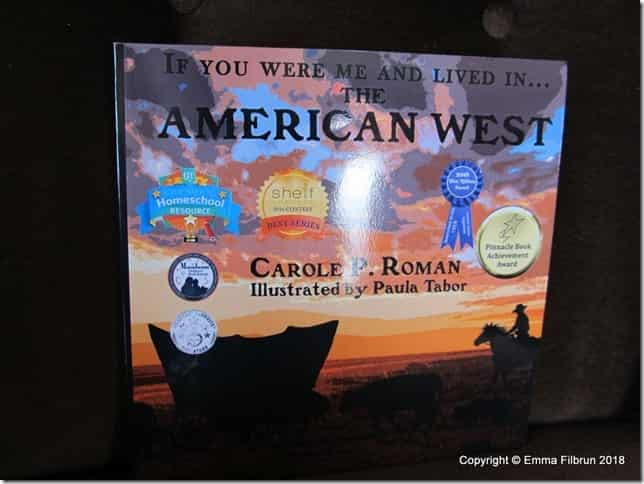
The second book I chose was If You Were Me and Lived in…The American West. I chose this one because of our study of American History, although it will be a good while until we reach the Oregon Trail. This book mainly describes living conditions on the trail, as if you were a child traveling in a wagon train. A number of the pictures appear to be photographs of a scene, with pioneers, or covered wagons, or a log cabin, added. I really like the effect this creates. One detail I did have a question about was the dates given; the child in this story traveled in “The Great Migration of 1843”, after a relative who had gone to California for gold told the child’s parents about Oregon. 25-IMG_4300

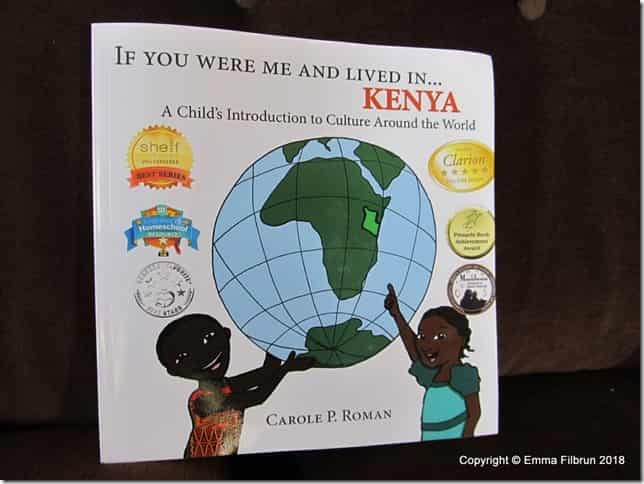
Our last book is If You Were Me and Lived In…Kenya. I chose this one because we have friends who were missionaries in Kenya for several years. I found this brief introduction to the people and country of Kenya to be very interesting. Several words and names that are commonly used in that country are included; thankfully, the pronunciations are given! Foods and games are introduced, as well as wildlife and an annual celebration. My boys did notice in one of the pictures that the children were not holding the cricket bat the same way they do when they play; they said their friend who is a cricket fanatic would have a fit if he saw that picture! Otherwise, I thought the book was accurate.22-IMG_4296

I wouldn’t mind having more of these lovely picture books on our shelf for reference. They are a good supplement to history and geography, and Little Miss loves just looking at them; in fact, I had to get one back from her to check on something just now as I was writing this review! She has the two history books with her at the moment and is making up a story to go with the pictures. In fact, she just informed me that she can read some of the words! In the Colonial America book, there is a picture of a boy holding a lobster. Her interpretation of the text beside it? “A spider is getting a boy to eat.” Maybe these books are good for developing imagination, as well as imparting information?!

One more thing…I noticed this afternoon a note in the back of the Colonial America book that there are additional resources available on the author’s blog. I took a quick look at what was available for the books we have. There wasn’t a lot yet, but for each of our two history books there were a couple of pages of study questions. The books are great on their own for younger children; the questions would help with creating a mini unit study for older children.
Crew Disclaimer

Filed Under: Book Reviews Tagged With: Book Review, Homeschool Review Crew, Homeschooling

Product Review—Home School in the Woods

March 21, 2018 by NZ Filbruns Leave a Comment

I’ve heard a lot about Home School in the Woods over the years. For awhile, we bought timeline figures from them, but that’s the only product of theirs that I’ve used. When I was offered the chance to review a few items from their Á La Carte collection recently, I decided that a couple of the products would fit in nicely with our history study for this year. Everything in this collection is in the form of downloadable PDFs, which is nice for those of us who live outside of the United States (saves postage and time!). Since we have a couple of good printers, this type of product works very well for us. 1-IMG_4302

The first product we used was The Jamestown Replica. We are studying American History this year; Mr. Intellectual is using a high-school level course, and I’m doing an elementary-level course with the other three boys. Because we start our school year in February, Jamestown is one of the settlements we study early-on; Mr. Intellectual covered it a week or two ago, and we’re reading books about it right now for the younger ones, so this model fit in very well. I had to buy some card stock to print it with, and was thankful to figure out a way to make heavy cardstock go through our printer! Mr. Diligence colored the model, and then Mr. Intellectual cut it out and put it together. He has always enjoyed putting models together, and Mr. Diligence has always enjoyed coloring, so that worked well.

This model seems to be very historically accurate, from what we’ve been reading. It’s nice to be able to see what the books talk about. Mr. Intellectual had a hard time fitting it together right, and was quite frustrated—and then he read the rest of the directions! Apparently, it is made correctly, contrary to his first conclusions, but he didn’t follow directions. It ended up looking good, though.

Home School in the Woods  Á La Carte products

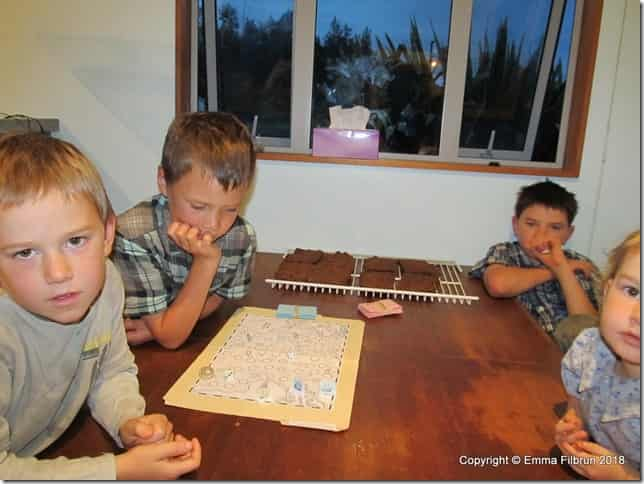
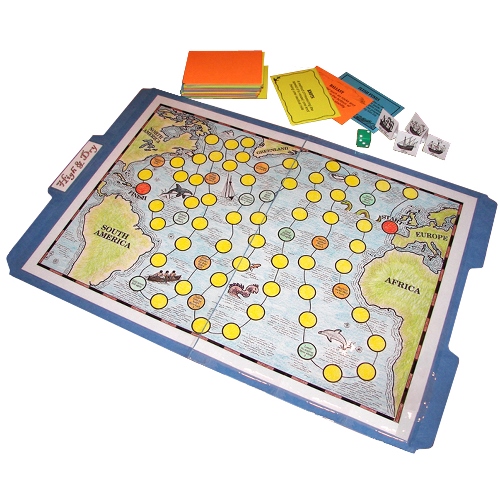
Our other product for review is the game, High and Dry. It is intended to teach the meanings of various nautical terms and sayings that come from sailing days. There are three packs of cards to print and cut out for this game. Each card has a term and its definition. One pack is general geographical and seafaring vocabulary, one is specifically sailing terminology, and the other is sea sayings. We had a lot of fun with that one. Where did “groggy” come from? Or “skyscrapers?” And why did a neighbor of ours in Cheviot often say, “Shivers!” as an exclamation of surprise or shock? We found out, playing this game! 1-IMG_4336

We made a couple of minor changes to the rules to make the game work better for us. Before starting to play, I read aloud all the cards we were going to use for that round. Otherwise, no one would have been able to answer very many of the questions. Because we have four boys that I wanted to play, since they are the ones doing history, I read all the questions, and didn’t play myself (there are four playing pieces supplied with the game). We ended up allowing Esther and Simon to help the two younger boys, because they had a lot of trouble remembering the definitions. They got some, and we always gave them a chance to get the answer before letting the big ones help. Our other change was to use two dice instead of only one, because the game got too boring when it lasted a long time.

We probably won’t end up playing this game very often, but I will pull it out when we study the days of exploration or the ocean. It’s a good way to learn some of the terminology from those topics. The younger boys enjoyed seeing some familiar places on the map used for a gameboard, from our study of Christopher Columbus.

It was hard to choose which two products to review! There are a number of other ones that look like good resources to supplement our studies. For example, I sort of wish I had chosen The Progress of Faith From Europe to the Colonies Timeline. That would have been a great thing to add. Maybe I’ll end up buying it, since these products don’t cost much.

Crew Disclaimer

Filed Under: Book Reviews Tagged With: Homeschool Review Crew, Homeschooling, Product Review

  • « Go to Previous Page
  • Page 1
  • Interim pages omitted …
  • Page 7
  • Page 8
  • Page 9
  • Page 10
  • Page 11
  • Interim pages omitted …
  • Page 14
  • Go to Next Page »

Primary Sidebar

  • RSS Feed
  • Facebook
  • YouTube
  • Goodreads

Recent Posts

  • Recovery
  • Book Review–Blaze of Honor
  • February 2026 Photos
  • Kiwi Chick, Blackball, Brunner Mine
  • Pancake Rocks

Archives

Disclosure

Some links on this site are affiliate links.

Subscribe to the Blog

/* real people should not fill this in and expect good things - do not remove this or risk form bot signups */

Intuit Mailchimp

The Family:


Dad and Mom (Gayle and Emma)

Girl #1, Esther, my right hand

Boy #1, Seth (Mr. Handyman)

Boy #2, Simon (Mr. Inventor)

Boy #3, Mr. Intellectual

Boy #4, Mr. Diligence

Boy #5, Mr. Sweetie

Boy #6, Mr. Imagination

Girl #2, Little Miss

Girl #3, Miss Joy

Book Reviews Website

IgniteLit

COPYRIGHT © 2026 · TWENTY SEVEN PRO ON GENESIS FRAMEWORK · DISCLOSURE & DISCLAIMER · PRIVACY POLICY