• Skip to primary navigation
  • Skip to main content
  • Skip to primary sidebar

Lots of Helpers

Our family's life in New Zealand

  • Home
  • Our Library
  • Math Freebie
  • Contact Us
  • Legal Policies
    • Disclosure and Disclaimer
    • Privacy Policy
You are here: Home / Archives for Science

Science

Aurora

July 21, 2024 by NZ Filbruns Leave a Comment

Along with almost everyone else in the high latitudes of the world, we were privileged to see the brilliant auroras in May. I didn’t get any decent pictures, but Esther got a few. She edited this first one to make the colors more like what we saw with the naked eye. Amazing! We saw this from our driveway, looking past the neighbor’s house with its lights on.

An hour or two later we drove up the road a little ways to where there were no lights, to see what we could see. The red was gone at that time, but there was a green glow in the sky that was also amazing.

Filed Under: Activities at Home Tagged With: Ahaura, Astronomy, Science

Science and Carpets

November 28, 2021 by NZ Filbruns Leave a Comment

I started going through a new science textbook with my three schoolchildren in October (sure seems strange to only have three in school! Technically, there are four, but Mr. Diligence is now working almost all the time, since he turned 16.). We are working through Exploring Creation with Chemistry and Physics, from Apologia. I’m finding it quite interesting. I think I may have done some chemistry in high school, but I really don’t remember for sure—and if I did, I don’t remember it! The children are struggling to understand what we’re learning and to enjoy it, but they love the experiments!

This experiment was to show how substances of different densities react. We mixed differing amounts of salt into these cups of water, and then put some into a straw. It was a lot of fun to figure out how to do this.

05-IMG_1864

01-IMG_1863

One jar held salt water, the other plain water—the egg floated in one of them.04-IMG_1861

What things float and what things sink?06-IMG_1869

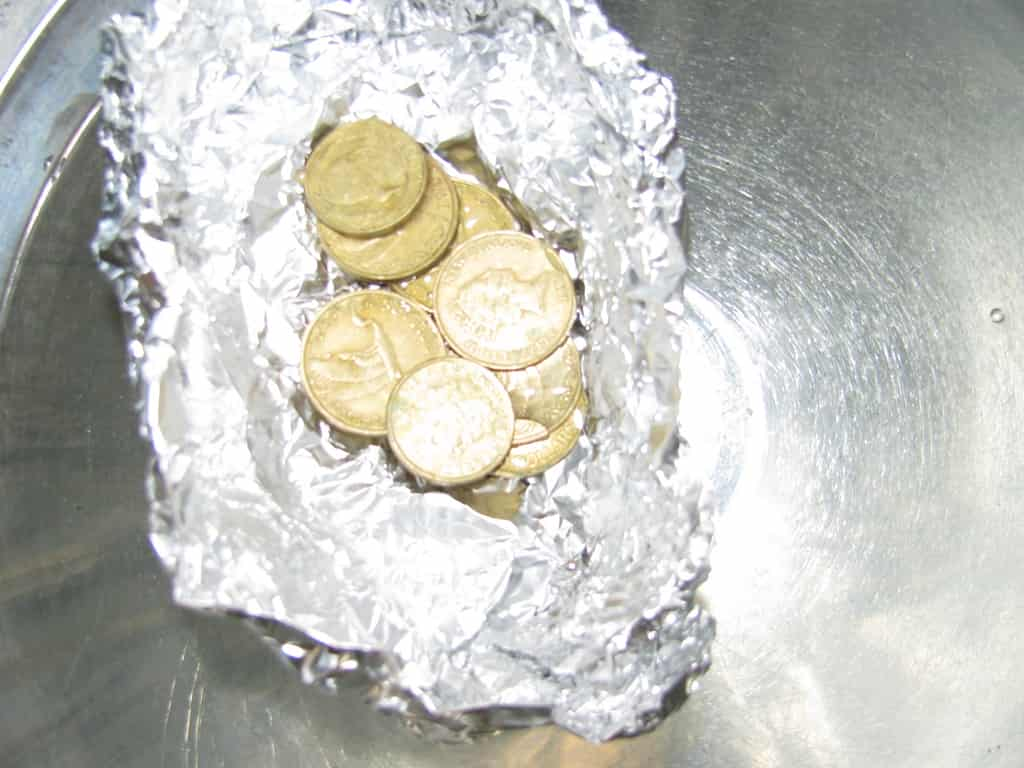
Each of the children got to fashion a boat from a piece of foil. Which ones would hold up the most coins?

07-IMG_187310-IMG_1872

Mr. Sweetie was the winner! He shaped his foil over a bowl.

02-IMG_1875

Elijah is enjoying his apprenticeship as a floor layer. One job he did a couple of weeks ago was to lay carpet tiles in the dining room/lobby of a seven-story hotel in Greymouth. He was given this diagram to follow. It is supposed to symbolize the Grey River, the sea, and the mountains. I was in town several days later, while he was working on the upper floors, and stopped in so I could see this amazing floor. It was still under plastic to protect it while renovations continue, but even so I could tell it is beautiful!

5-IMG_0208

4-IMG_0204

Here is a picture Elijah took from an upper floor. What a view! That is the Grey River, emptying into the sea in the distance.

7-IMG_0228

Filed Under: Activities at Home, Away From Home Tagged With: Homeschooling, Science

Product Review—CrossWired Science

April 17, 2019 by NZ Filbruns 2 Comments

I wasn’t overly excited about reviewing CrossWired Science when the opportunity was presented, but we watched all the sample videos before I made the final decision, with input from my four school boys. We all agreed that the videos were fascinating—and one of them answered a question I had vaguely wondered about before (how do animals get their Vitamin D?). We decided to request this online program for review and give it a try. Am I ever glad we did! I am loving it! The children are enjoying it, as well, some more than others.

Product Image 1Product Image 2

We have been given access to both of the global topics that CrossWired Science has come out with so far, Sound, and Fluid Dynamics. So far, we have mainly focused on Fluid Dynamics, since the majority vote from the boys was for that one, although I would like to go through Sound as well. It has been fascinating to learn about how air and water work. We have watched videos on a number of subjects that all have to do with air and water movement. For example, one was about Dog Slobs & Cats. It showed, in great detail, how both animals lap water and why dogs make a mess while cats are tidier (although our cat manages to splash milk all around her dish, somehow). After we watched that, Mr. Imagination checked out our cats’ tongues to confirm that they have the texture that the video said they did. Other videos talked about dolphins, boxfish, penguins, nose aerodynamics (now we know why our cats are so lazy!), carburretors, and the alulas on bird wings (another lifelong mystery cleared up for me), among other topics. Each video has a worksheet with questions from the video, as well as a true/false online quiz. We have not done any of these worksheets, because they were not available when we started the course, but have done the quizzes. There were a few discrepancies between the quizzes and the videos; this is a brand-new course and is a work in progress, so I expect to see these problems resolved soon. (It’s very good already, but once these issues we noticed are corrected, I believe this site will be great.)

Worksheet #1

Besides the videos, there are many other suggested activities. There are a lot of options for experiments. I somehow neglected to get any pictures of my boys trying out the matchhead rockets, but they spent several days playing around with them. They had loads of fun building and shooting off these miniature rockets, and Mr. Intellectual discovered a new-to-us YouTube channel full of fun experiments (I think it includes a fair number of explosions, which he loves!). They also tried out the paper airplanes and figured out how to make a loop of paper fly very well across the room.

One page suggests many books to read. We have a few of them, so we added them into our read-aloud day. I was happy to be reminded to read The Great Dinosaur Mystery and Dry Bones and Other Fossils with my boys. The wide range of books that are recommended would make a great library. They suggest several biographies by Janet & Geoff Benge, one of which (Alan Shepard) we read in the past year. They also recommend Creation magazine, so I told Mr. Intellectual to spend his science time one day summarizing what he had been telling us about from the most recent issue the day before.

Right now, we’re working our way through the Gold Dig section. This is six pages about bones. The first page had a video and a quiz; we’re currently on the next page, which talks about all sorts of subtopics having to do with bones—just look at this outline!

Bones #1There is a worksheet which goes along with this. Each day, I’m reading through about three sections of this page with Mr. Diligence, Mr. Sweetie, and Mr. Imagination, and we answer the questions that go along with those sections. It takes about 15 minutes to do that much, and that’s about all the time they can handle doing something like this, since we usually don’t get to it till after lunch and they are ready to run outside! Mr. Intellectual is doing this part by himself, since he is a strong reader. One thing we really enjoyed about this page was a photo of the International Space Station. What we really loved was that New Zealand, and the top part of our island, was in the background! It’s a very clear photo, and we could almost see where we used to live!

I’m also looking forward to learning about sound. So far, all we have done there is to watch one video, which was about the larynx and the vocal cords. It looks like the Global Topic on Sound is laid out similarly to the one we’re working on. All the Digging Deeper pages have something to do with sound, in humans as well as the animal world. We had started the year using the same series of science textbooks we’ve been using and loving for the past several years, but I’m thinking we’re going to finish what we want to use in CrossWired Science before we go back and finish that book. There is so much to love in this course! We’re enjoying the variety of ways to learn about the topic, and we love the way it points to the Creator. One thing we’ve noticed is that the videos don’t actually mention God, but what we read on the screen does. The videos do talk about how things are designed to work the way they do, very definitely giving glory to God if you think about it a little. I am very slow to buy an online program for school, but this is one that is worth the price they ask for it, even for us. I like it and am very glad we were put on the review.

If you are interested in trying out this fascinating website, here is a coupon code that will take $5 off every order—no matter how many times it is used: loh12.

One thing I had a bit of trouble figuring out is how to schedule CrossWired Science. There is so much information here, in a variety of styles, but it’s not laid out in lessons, although I have heard that there is a suggested schedule somewhere on the website—I haven’t found it myself. The intention is that a student will choose what appeals to him, and work through most or all of each project (Fluid Dynamics is one project) in any order. The way it’s set up, you click a button labeled “Finish Quiz” at the bottom of each page, and then you can tell by looking at a bar at the top of each page how many more pages there are to complete. All ages can do this course together. Of course, older children will go more in-depth than younger ones, but even Little Miss, who is four, enjoys the videos. Also, there are two levels. We’re using the First-Timer course, but for those who have been through it once as a younger child, they can do it again using the Second-Timer course. I haven’t looked at it yet, so I can’t say how it is different. Here are screenshots of the menu on the Lesson Page. You can see that they have made it easy to tell which lessons are completed.

Dashboard # 1Dashboard # 2

Each project is intended to be a full Science curriculum for a month or two. The plan is to have enough projects up to provide six years of Science! I’ll be very interested in following the progress of this course to see how it develops. Of course, not only can it be used as a stand-alone curriculum, it could also be used as a supplement to any other science curriculum. Be sure to click on the banner below to see what the rest of the 80 reviewers have to say—I’ll be checking out some of those reviews, because I’m curious to know what others think of this!

Sound, and Fluid Dynamics {CrossWired Science Reviews}
Crew Disclaimer

Filed Under: Book Reviews Tagged With: Homeschool Review Crew, Homeschooling, Product Review, Science

Book Review—Exploring Creation With Astronomy

December 6, 2017 by NZ Filbruns Leave a Comment

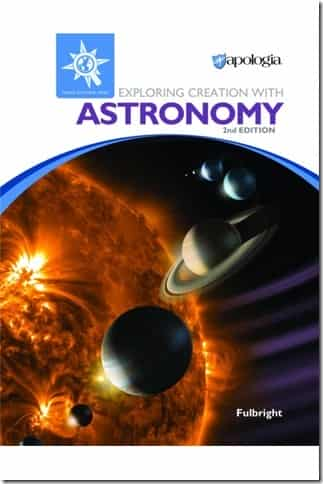
We just finished science for the 2017 school year. This is the fourth year in a row that we have used Apologia’s Elementary science, and we’re still loving it. This year, we used Exploring Creation With Astronomy. I thought Jeanne Fulbright wrote great books before—but in this 2nd Edition she outdid herself! This was a very fascinating course. I’m glad I decided to buy the new book instead of borrowing the old one from a friend.

homeschool-curriculum

Since our school year began in February, we have traveled through the solar system and beyond. We began with a quick overview of astronomy and the solar system, and then took more in-depth looks at the Sun and each planet, as well as the moon. There was also a chapter on Space Rocks, tucked in between Mars and Jupiter. The section about the Asteroid Belt was especially fascinating to me; the hypothesis presented for the existence of the asteroids sure made sense to us! The second-to-last chapter was also very fascinating for me, as it presented information that has been discovered recently, so it was all new for me. I think it’s rather sad that Pluto has been downgraded to a dwarf planet, but it was very interesting to learn about such things. The Kuiper Belt, too, was new to me—and so interesting! The last chapter talked about stars and space travel.

As we have done before, I bought the notebooking journals to use with the textbook. We get a lot more out of the course by using these workbooks. Every day as we read, the boys narrate a sentence or two (or more, if they enjoyed the section) about what they learned, and there are activities to do as you go through each of the chapters. Each chapter has anywhere from one to three minibooks to make, to help with review, and there is also a vocabulary activity. We liked the way the 2nd edition notebooking journal was laid out much better than the others we have used. Instead of having to find the pages for the minibooks in the back, they were right in each lesson, where we needed them. Also, these activities were interspersed with other things in the lesson, rather than always at the end. The book was a bit more attractive, too.

We didn’t do all the activities, but some that we did were great fun. Probably the most memorable was the time we made a “scale model” of the distances in the solar system if the sun were the size of a dime—so incredible!

As always, I highly recommend Apologia’s science! We love that God and His Word are honored all the way through, and we enjoy the very interesting way in which facts are presented.

You can see pictures of a couple of our projects from this course here and here.

Filed Under: Book Reviews Tagged With: Book Review, Homeschooling, Science

Book Review—Exploring Creation with Zoology 2: Swimming Creatures of the Fifth Day

December 26, 2016 by NZ Filbruns Leave a Comment

We have finally finished our science course for the year. It was very hard to get in time for science this year, with the crazy schedules we had all year, and a lot of time off school for one reason or another. Toward the end of the year, after several of the boys finished some subjects and I had more time, we were able to do lessons more often. I have thoroughly enjoyed our study this year, of Swimming Creatures of the Fifth Day. I am greatly enjoying getting an in-depth look at various topics from a strongly Christian, Creationist point of view. Jeannie K. Fulbright has done an excellent job with this book, as with the other books we’ve used that she wrote.

1-51405YcA6IL._SX363_BO1,204,203,200_

The lessons in this book cover aquatic animals in general and the oceans, whales, seals and sea cows, aquatic herps (reptiles and amphibians), primeval reptiles such as plesiosaurs, fish, sharks and rays, crustaceans, mollusks, cephalopods like squids and octopuses, echinoderms (sea stars and sea urchins), cnidarians like jellyfish and coral, and other aquatic animals such as sponges, worms, and some microscopic creatures. We learned a lot of very fascinating facts! I think this was the most interesting book from this series yet, for us, since we live very near the ocean and have seen many of the creatures covered in the book. In fact, a few days before we did the lesson on octopuses, a couple of my boys found an octopus among the rocks at the edge of the sea!

The favorite part of this book appears to have been the very last lesson we read. It was about microscopic creatures, specifically rotifers and tardigrades. That was apparently the most intriguing thing for a couple of my sons! Another of the boys remembered quite a few things. He enjoyed learning the difference between true seals and eared seals; we have eared seals in our area. He also liked learning about the sizes of some of the giants of the sea, such as manta rays and leatherback turtles. Another favorite topic for him was symbiosis, the way various animals work together to live, such as clownfish and sea anemones. He also mentioned being fascinated with the Man O’War, which is actually a colony of several animals!

As we have done other years, I purchased the notebooking journals that go with this book. They cost a fair bit, but they really help me organize our study. As we read each section of the lesson (which takes us about four days of reading together to get through), I have the boys write a sentence or two about what they learned in that section. After we finish the reading, each of them creates a mini book from pages provided in the back of the notebook, writing down information about the various animals and topics covered in the lesson. I do the writing for most of the boys, because they struggle so much with it and will come up with a lot more if they don’t have to do the mechanical part of the writing. There are also copywork pages for each lesson, vocabulary exercises, and usually a crossword puzzle for the older children. The junior notebooking journal has other activities to review vocabulary. There is also a page of review questions in the older book. There are book suggestions for most lessons to expand the study, but our libraries here don’t have many, if any, of the books. There are also suggested experiments, and you are supposed to build a diorama of an underwater scene as you go through the entire book. We don’t do a lot of those activities, though. Especially this year, we were struggling to just read the book and do the review! If we had more time, it would be fun to do more.

I highly recommend Apologia’s Young Explorers Series. This is the best science course I have come across. It will take something pretty amazing to lure us away from using these books! I love being able to learn fascinating facts along with my sons. We also love the way the author honors God and shows His design in the way the animals are made and act.


Filed Under: Book Reviews Tagged With: Book Review, Homeschooling, Science

Last Week’s Science

December 4, 2015 by NZ Filbruns Leave a Comment

We are on our summer homeschooling schedule now, which means that instead of school lasting all morning we only do about an hour, besides the hour or two of reading aloud (whatever they can get me to do!) we do every day year round. We’re doing reading and spelling, basically, through the summer, just so my dyslexics don’t forget everything they’ve learned.

We did do some science last week, though! On Monday, the vet came to pregnancy check our cow. He uses an ultrasound wand to check, and it has a button you can push to freeze the image so other people can see what he has found. We were very excited to get to see our next calf, just 40 days after the cow visited a bull! It was a round ball, about 2 cm in diameter. He said that by 60 days they have legs and a head, and he can tell if it is a heifer or bull if it’s laying the right way.

A couple of days later, we brought some water in from the mucky, stagnant pool that was left in the creek out front, just before the boys got all the rest of the water pumped onto the garden. We had fun looking at stuff through the microscope. There were a lot of these round green things floating around. They moved pretty fast, twisting and turning as they went. We also got a very close-up picture of a mosquito larva (second picture). The big circle by its head is an air bubble.IMG_2322IMG_2328

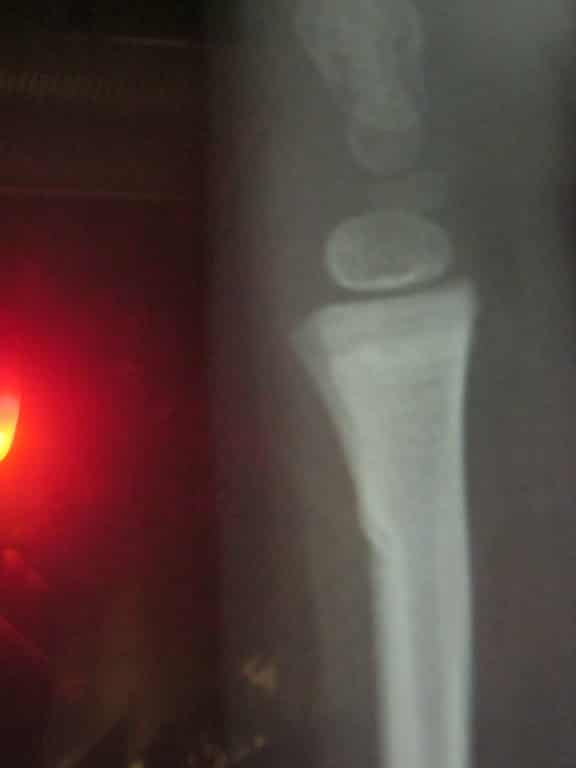
Then, on Thursday, I took the children to Christchurch. Mr. Sweetie had fallen pretty hard the week before, and two doctors here in Cheviot said he almost certainly had a greenstick fracture. To get an x-ray and a cast, we have to go to Christchurch. Sure enough, when we did the x-rays, he had a small fracture. The boys got to see the x-rays, and watch the cast get put on. Mr. Sweetie is now sporting a bright green cast! I paid extra to get the lining that is waterproof, and I’m glad I did; within half an hour of arriving at home that evening he had fallen into the duck pond! IMG_2333IMG_2343

Filed Under: Activities at Home Tagged With: Homeschooling, Science

Exploring Creation With Zoology 1: Flying Creatures of the Fifth Day–book review

November 1, 2015 by NZ Filbruns 7 Comments

This year, we used Zoology 1. Here is the review I just finished writing of it.

exploring-creation-with-zoology-1

This is the second of Apologia’s elementary science books that we’ve used. We just finished it; last year we went through their Human Anatomy book. Several of my boys liked Flying Creatures of the Fifth Day a lot better than last year’s science. Apparently, birds, bats and insects are much more popular than the human body, among my sons!

I used Flying Creatures with five boys at once this year, ages 15, 13, 11, 9, and 5. I was very pleasantly surprised by how much the 5-year-old learned from this course! At the beginning of the year, he wasn’t remembering much of anything, but by the end of the year he was able to remember a fair amount from each lesson. His dictated narrations were longer and better as the year went on. 

Exploring Creation With Zoology 1: Flying Creatures of the Fifth Day is divided into 14 lessons, each intended to take about two weeks to complete. We averaged a week and a half to two weeks, and that was a very comfortable pace. The first six lessons are about birds, including a lesson about flight which my sons found quite interesting. Lesson 7 is all about bats, lesson 8 is about flying reptiles (extinct), and the remaining six lessons are about insects of all types. Ever since we started learning about insects, my 3-year-old, who often listened in and looked at the beautiful color photos illustrating nearly every page of the textbook, has been bringing me insects and wanting to study them. 

This textbook is anything but dull and dry. The content is presented in an engaging, interesting way, with amazing facts about the various birds and insects sprinkled throughout. I loved going through it, and I just asked my 11-year-old if he had anything to say. He responded, “I loved it!” One thing we especially appreciated was the way God is honored all the way through this course. Before we discovered the elementary Apologia textbooks, we used a lot of Usborne books for science, and frequently I had to tell the boys that something wasn’t true. This especially bothered one of them, who then didn’t know whether to believe anything in the book we were reading. He hasn’t had that problem with Flying Creatures! We’re looking forward to working through Zoology 2 next year.

I purchased the Notebooking Journals to go along with the textbook. For me, they are very valuable. You could easily make your own by following the directions in the textbook at the end of each lesson, but for us it works best to have something preprinted. At the beginning of each lesson, the notebook has a couple of pages on which to take notes or draw pictures. I generally have each boy write a sentence about what he learned in each little section of the lesson as I read it aloud. After we’ve read the entire lesson, we answer the review questions. We don’t use the crossword puzzles for vocabulary practice, because of the dyslexia we have to work with, and we haven’t used the handwriting practice pages, because we had a different handwriting course. We almost always make the mini-books they provide as a final review for each lesson, however. They have been a good way to organize what we learned in the lesson. Each lesson also has a page or two of further activities for investigating the topic of the lesson, and suggested books or DVDs to go along with it. We were able to find a few of the suggested books in the library. 

I am very thankful to have found Apologia and look forward to continuing through their books!


Filed Under: Book Reviews Tagged With: Book Review, Homeschooling, Science

Exploring Creation With Human Anatomy and Physiology–book review

October 30, 2015 by NZ Filbruns Leave a Comment

Sometime last year, I wrote a post about this book, but I decided to share the review I just finished writing of it here anyway. I love Apologia!

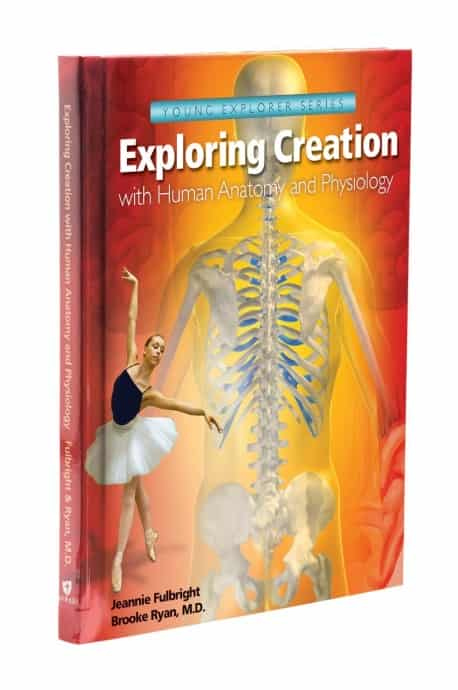
exploring-creation-with-human-anatomy-and-physiology

For about 10 years, we used Sonlight Curriculum for our science. It was all right, but we didn’t love it. Two years ago, I discovered Apologia’s Young Explorer Series and was able to get some of the textbooks used, to take a good look at them. One look was all it took to convince me that these books were a better fit for our family than what we had been doing.

The first Apologia elementary science textbook we used was Exploring Science With Human Anatomy and Physiology. Looking back, I’m not sure I’d recommend starting with that one. It goes into a lot of depth and is more advanced than some of the other books. I used it with four of my boys, ages 14, 12, 10, and 8. The 10-year-old loved it; the 12-year-old had decided before we ever started that he would hate it, and couldn’t back down. I loved it! I learned a lot, myself. For example, I just opened the book at random and found where it talked about growth plates. Your long bones, such as in your arms and legs, have growth plates close to the end, where new bone is added to make you grow. Of course, once you are full-grown, these growth plates fill in with solid bone. If you are injured at a growth plate when you are young, that bone may stop growing and you may end up with one leg or arm shorter than the other! Right after we read that part of the lesson, we ate chicken for dinner, and one of my sons discovered a growth plate in a leg bone. Science at the dinner table!

Each of the 14 lessons in the book has around 15 pages of engagingly-written information about the topic for that chapter—bones or cells or respiratory system, etc—and then a few pages of activities to help cement the information in the children’s minds. The author recommends making a notebook to go along with the textbook, and taking notes as each chapter is read. There are also review questions in the last section of each lesson and an experiment to illustrate a point from the lesson. Throughout the book, you will be given instructions in making a “personal person”–a picture of a person, to which are added more and more layers as you go through the book. Each layer will be a different body system, such as the skeleton, the circulatory system, the respiratory system, and so on. Each lesson should take about two weeks to work through.

To go along with the textbook, Apologia offers Notebooking Journals. They have one for older children and one for grades 1-2. I used them to go along with this course, and found them to be very useful. At the beginning of each lesson, there are a couple of pages on which to take notes or draw pictures of what is being taught. I always read the textbook aloud, and at the end of each section (1/2-2 pages) I have each of the children write a sentence about what I read. After we have finished the reading for the lesson, we answer the review questions, which are in the notebook. There are also crossword puzzles for the vocabulary words in each lesson, which we don’t use because they are too much for my dyslexic sons, and handwriting pages with a Scripture verse that goes along with the topic of the lesson. Then, there is a page on which to glue a mini-book about the topic of the lesson (the pieces to put together for the mini-book are in the back of the notebook). The children write what they have learned from the lesson in the mini-book. There are also a few pages of suggestions for further study, such as books or DVDs, and other activities and investigations you can do. The Junior Notebooking Journal contains most of these features, with a few changes to make them simpler for younger children. Instead of the crossword puzzle, there is usually a cut-and-paste activity for vocabulary, and there are coloring pictures at the beginning of each lesson.

One of my favorite aspects of Apologia’s Science is the way God is honored! For the past several years, one of my sons had been asking me if this or that was true, in the Usborne books we were using. I had to tell him, every so often, that no, this part is not true. In Exploring Creation With Human Anatomy and Physiology, I never had to say that! Over and over throughout the book, the author points to God’s wonderful design for our bodies. I can’t recommend this book highly enough! Oh, one more thing I liked. The last chapter is titled “Growth and Development.” Even though it talks about the development of the embryo and growth of a baby in the womb, and about genetics, the author does not discuss how a baby is made. There was absolutely nothing in that chapter that I did not want to read to my young boys.

Filed Under: Book Reviews Tagged With: Book Review, Homeschooling, Science

Fossil Hunting

June 13, 2012 by NZ Filbruns Leave a Comment

Yesterday at our homeschool writing group meeting, a man showed us a powerpoint presentation about fossils.  He has been collecting fossils for several years and has an impressive collection from the local area.  My boys badly wanted to go to Gore Bay and search for fossils along the cliffs there, so, since it was sunny and warm today, we went right after lunch.  When we arrived, the tide was high, with waves hitting the cliffs, so we sat on top and read some of our books for school before we went down.  The tide was still so high that we couldn’t get to the best places, but the boys climbed up some of the less-vertical cliffs anyway.  We never found anything that we were sure was a fossil today, but had fun exploring anyway.  One unusual thing we saw was an oystercatcher (bird) with a missing foot!  I could tell something was strange about it, and when I was able to see its tracks, it had one normal footprint and one that was just a round peg.  Poor thing.

The tide when we arrived.

Reading stories.

This one quickly got bored with the stories and found something more interesting! Climbing the cliff to hunt for fossils

After they gave up on fossils, they cut a few branches of lupine bushes.

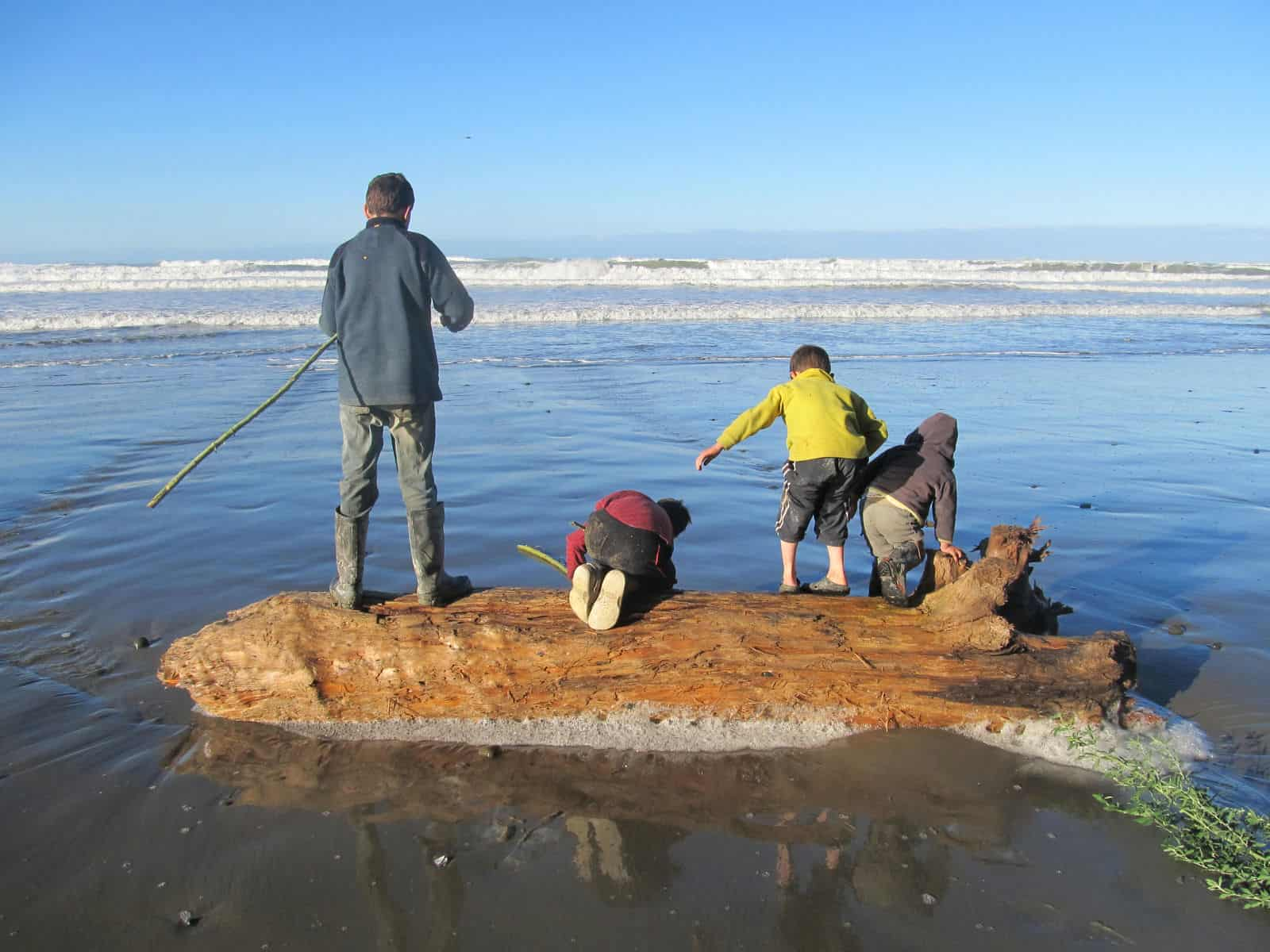
Driftwood makes a great boat.

The tide when we left–quite a ways farther out, and notice the shadows. Short days right now.

And these two pictures are just because they’re cute!  The first one was this morning when 2-year-old needed something to do during school and I assigned him to “read” to baby.

This one was after we got home this afternoon.  I set baby on the couch while I went to do something else, and when I came back he was staring, fascinated, at his booties!  They kept wiggling!

Filed Under: Activities at Home, Away From Home Tagged With: Baby, Canterbury, gore bay, Nathan, Ocean, Science

Primary Sidebar

  • RSS Feed
  • Facebook
  • YouTube
  • Goodreads

Recent Posts

  • Moonlight Track
  • April 2026 Photos
  • New in the Library! May 2026
  • March 2026 Photos
  • Recovery

Archives

Disclosure

Some links on this site are affiliate links.

Subscribe to the Blog

/* real people should not fill this in and expect good things - do not remove this or risk form bot signups */

Intuit Mailchimp

The Family:


Dad and Mom (Gayle and Emma)

Girl #1, Esther, my right hand

Boy #1, Seth (Mr. Handyman)

Boy #2, Simon (Mr. Inventor)

Boy #3, Mr. Intellectual

Boy #4, Mr. Diligence

Boy #5, Mr. Sweetie

Boy #6, Mr. Imagination

Girl #2, Little Miss

Girl #3, Miss Joy

Book Reviews Website

IgniteLit

COPYRIGHT © 2026 · TWENTY SEVEN PRO ON GENESIS FRAMEWORK · DISCLOSURE & DISCLAIMER · PRIVACY POLICY